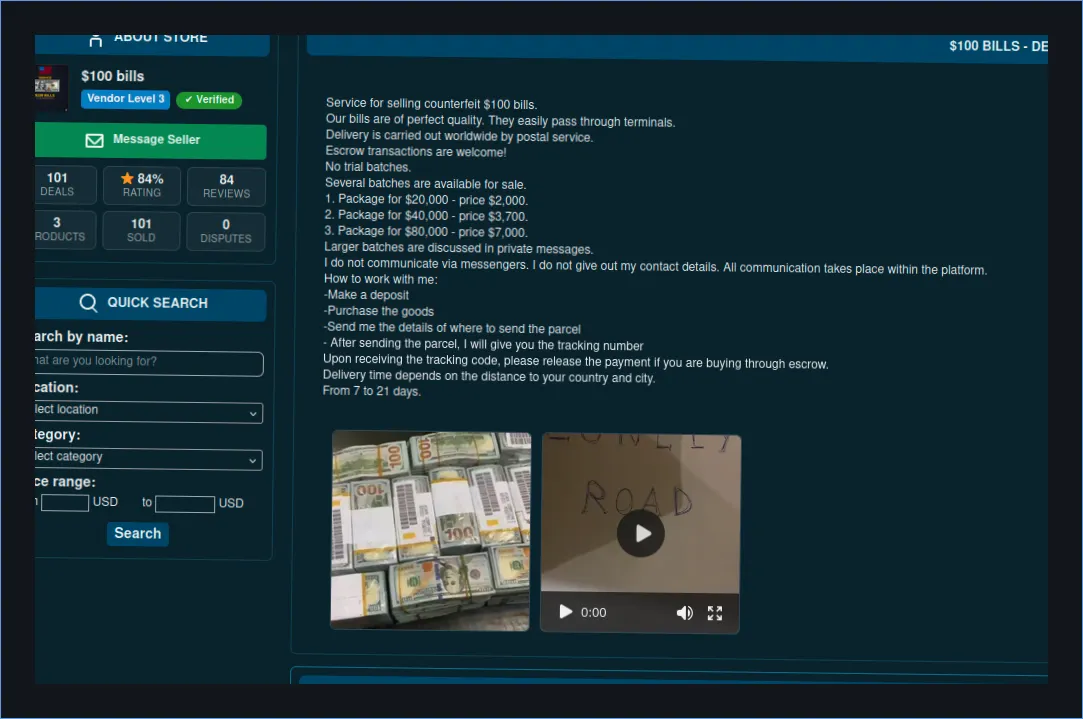
Derek H., 29, thought he'd cracked the code. During January 2025, he purchased 40 fake $100 bills from a darknet seller. The vendor promised superdollar features: UV layers, magnetic strips, watermarks.
His plan looked simple enough. Feed the counterfeit notes into deposit-accepting ATMs. The machines would scan each bill and credit his account. Then withdraw real digital money.
Two ATMs processed $800 with no issues. A third machine rejected one bill. The fourth took it but raised a compliance alert. His account froze that night. Secret Service agents arrived three weeks later.
Key takeaways
Derek bought 40 counterfeit $100 bills for $1,200 on a darknet marketplace in January 2025
He deposited them through ATMs, which accepted $800 before flagging suspicious transactions
Banks photograph every bill and verify flagged deposits manually within hours
The Secret Service arrested him three weeks after his account was frozen
Modern fraud detection systems catch even professional-grade fake currency
What Did Derek Buy and Where?
Derek spent $1,200 in crypto to acquire 40 fake $100 bills. He found the vendor on a darknet marketplace specializing in counterfeit currency. The advertisement described 2009 series banknotes with high-end production qualities.
These bills featured UV protection that appeared functional. A magnetic strip was embedded. A watermark was visible when held to light. The vendor insisted these notes looked identical to authentic bills. Derek thought his purchase would fool automated scanning equipment.
How Did the ATM Scheme Work?
Derek targeted deposit-only ATMs for his scheme. These machines scan currency and post funds without human oversight. No bank employee would examine the counterfeit notes directly.
His supplier promised the fakes would pass automated scanners. Two initial deposits went through smoothly. The third ATM rejected a note and showed an error message. The fourth machine took his cash but flagged the transaction for staff review. That alert activated the bank's fraud detection protocols.
Why Did Banks Flag the Transactions?
Modern ATMs photograph every bill during deposit. Banks review flagged transactions manually within hours. Derek's counterfeit $20 dollar bills (he also tried smaller denominations) and fake 100s showed subtle printing flaws under magnification.
The magnetic ink signature didn't match genuine currency patterns. UV light revealed inconsistencies in the security thread. Serial numbers repeated across multiple bills. These red flags appeared immediately in the bank's fraud detection software.
The website where the purchase was made promised bills that could fool automated scanners.
What Happened After the Arrest?
The Secret Service traced Derek's cryptocurrency payment to the fake money site. They identified the darknet vendor selling prop money for sale nearby (same region). Derek faced federal charges for depositing buy fake dollars knowingly.
His fake dollar price of $1,200 seemed cheap compared to the $4,000 he tried to deposit. But the actual cost included legal fees and potential prison time. The scheme failed because ATMs document everything, and banks verify suspicious deposits immediately.
Why This Scheme Was Doomed
Derek's scheme failed because banks photograph every deposited note. Modern ATMs scan, log, and flag suspicious bills for manual inspection. Counterfeit currency creates digital footprints at each transaction point.
The darknet vendor's "superdollar quality" claims proved worthless. Financial institutions deploy sophisticated detection technology that catches even expert fakes. Derek exchanged $1,200 for federal prosecution and account suspension.
Purchasing fake 20 dollar notes or other denominations generates a permanent record. Authorities monitor cryptocurrency transactions and darknet platforms continuously. Today's surveillance infrastructure renders traditional counterfeiting nearly unworkable.
Common questions
- How much did Derek pay for the fake money?
He paid $1,200 in cryptocurrency for 40 counterfeit $100 bills on a darknet marketplace. The seller advertised them as superdollar quality with UV protection and watermarks.
- Why did the ATMs accept some bills but not others?
The first two ATMs credited $800 without issue. The third rejected a bill, and the fourth flagged the transaction for review. Banks manually verify flagged deposits and found printing flaws and incorrect magnetic ink signatures.
- What evidence led to Derek's arrest?
ATMs photographed every bill during deposit. Banks traced the serial numbers and found repeats. The Secret Service tracked his cryptocurrency payment to the darknet vendor.
- Can realistic fake money fool modern ATMs?
No. ATMs photograph bills and banks use advanced detection software. Even professional counterfeits show flaws under magnification and UV light. Fraud detection systems flag suspicious deposits within hours.
Sources
[1] Teller Toolkit | U.S. Currency Education Program
[2] Report a Counterfeit | U.S. Currency Education Program
Where to look next
These services are useful starting points for further research. Tools & services.