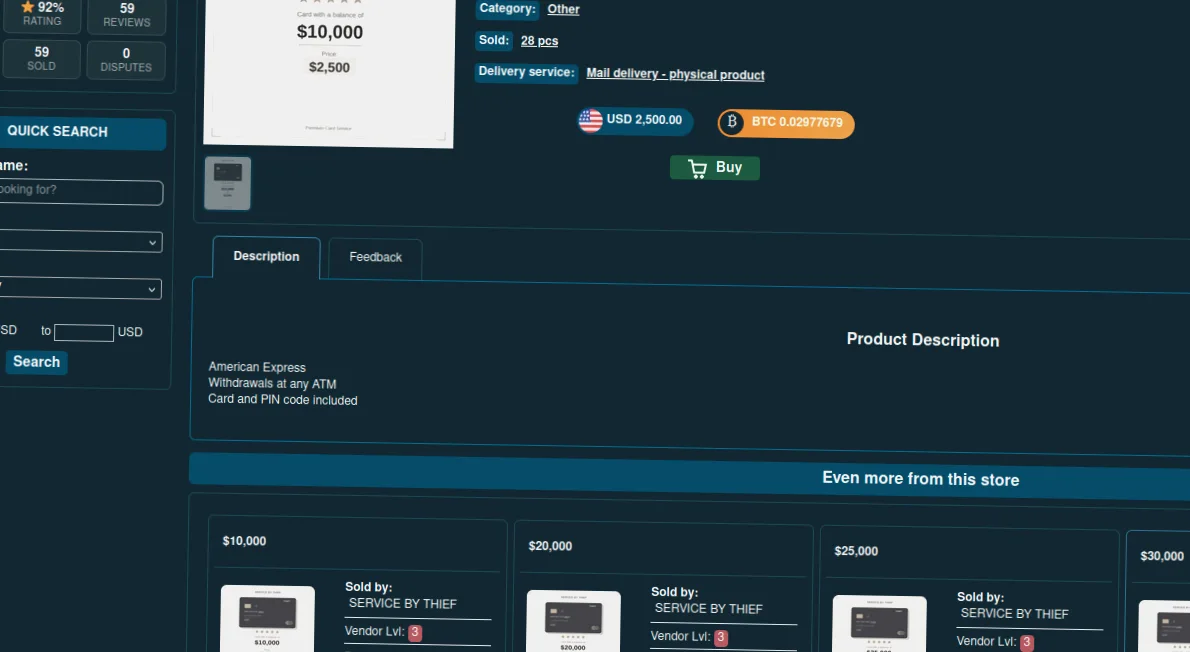
Mark T. believed buying cloned cards on the dark web would be untraceable. He spent $480 in cryptocurrency for six cards with PIN codes and successfully withdrew cash from three ATMs. The fourth machine recorded his face in high definition. That 23-second video became the centerpiece of a federal case that ended in a 60-month prison sentence.
This case reveals how physical surveillance intersects with digital forensics. The investigation connected ATM footage to ISP logs, cryptocurrency purchases, and physical evidence found during a home search. Every withdrawal created a data trail that investigators followed backward to the original transaction on a darknet marketplace.
Understanding how law enforcement dismantled this scheme matters for anyone studying fraud prevention. The story illustrates why card skimming protection and detection methods exist, and why criminals consistently underestimate the surveillance infrastructure built into modern banking systems.
What Happened in Tampa Bay
Mark T., a 34 year old Florida resident, ordered cloned debit cards from a darknet seller in November 2024. He paid $480 using Monero cryptocurrency. Six cards arrived containing stolen magnetic stripe data and the corresponding PIN numbers.
He visited four separate ATMs over multiple days. Three machines dispensed money smoothly, giving him $4,200 combined. The fourth location in suburban Tampa Bay released $700 but recorded everything on camera. Mark appeared in full view—no hat, no sunglasses, no mask.
Victims in Florida, Georgia, and North Carolina contacted their banks within 24 hours. The financial institutions immediately froze the compromised accounts. Automated systems detected a suspicious pattern linking several cards to the same withdrawal behavior.
Federal agents from the Secret Service assumed control on day five. They collected transaction records and camera footage from each ATM. The fourth machine's video offered sharp facial images that matched Florida driver's license records. Location analysis revealed every withdrawal happened inside a 40 mile circle around Mark's home.
Police raided his address on day 14. They seized six blank cards, magnetic stripe writing equipment, $3,200 in cash, and a laptop with Tor Browser installed. Officers arrested Mark the following day. During interrogation, he confessed to buying the cards and withdrawing the money.
How Cloned Card Schemes Operate
Card fraud follows a clear chain from theft to cash. Criminals steal your data, burn it onto plastic, then sell it to people who drain your account. Understanding each step shows why prevention beats detection every time.
The operation unfolds in five clear phases:
Data theft: Fraudsters install skimming gear on ATMs and fuel pumps, slip shimmer tools into card readers, launch phishing attacks, or purchase stolen magnetic stripe dumps from underground carding markets.
Card production: Stolen track 1 and track 2 information gets written onto blank plastic using magnetic stripe reader equipment.
PIN acquisition: Overlay keypads or concealed cameras capture PIN codes at compromised terminals, giving criminals full account access.
Money extraction: Purchasers drain ATMs before account holders notice fraudulent activity and lock their cards.
Fund laundering: Stolen cash moves through Bitcoin kiosks or peer-to-peer crypto exchanges, breaking the money trail.
People browsing cloned cards reddit threads and cf card cloning tutorials overlook one critical fact. Every ATM visit generates forensic evidence that law enforcement retrieves later. Vendors promise anonymity, yet physical cash withdrawals put you directly in front of surveillance cameras.
Buyers spend time learning ways to spot if a reader has been tampered with. They ignore a fundamental reality: the entire terminal operates as an evidence recorder. Current machines log biometric markers, transaction details, and GPS coordinates all at once.
Grasping this sequence reveals why spotting tampering helps less than avoiding risk entirely. The moment you insert fraudulent plastic, you create a documented record. The system captures your presence whether or not skimming devices sit on its surface.
Why ATM Surveillance Defeats Anonymity
How do police trace users of anonymous payment methods? Physical interactions expose digital secrecy. Cash machines create unavoidable vulnerability points where criminals must appear in person.
Every ATM operates as a comprehensive surveillance hub:
Primary lens: Records faces in 1080 HD resolution; infrared lighting functions after sunset
Secondary lens: Positioned at alternate angles, usually concealed from customers
Transaction logs: Document exact timing, card information, withdrawal amounts, terminal identifiers, approval codes
GPS tracking: Embedded chips record precise geographic coordinates for each session
Network records: Capture bank server exchanges, preserve IP addresses and routing information
Mark approached his fourth terminal in a Tampa Bay area. The integrated camera filmed his exposed face continuously for 23 seconds. Standard bank hardware captured everything—no skimming device involved. Banks review footage from compromised terminals regularly, and they run facial recognition software during fraud investigations.
Investigators matched the terminal footage against Florida Department of Public Safety records. Recognition algorithms delivered matches within hours. The withdrawal sites formed a pattern around Mark's home address, justifying deeper investigation.
Fraud detection systems triggered automatically when three cardholders in different states reported suspicious cash withdrawals inside 48 hours. Machine learning connected the linked transactions before human analysts reviewed the case. Automated alerts compressed investigation timelines significantly.
Why does this matter? Physical visits create evidence that encryption cannot eliminate. Digital privacy ends where cameras begin. Every terminal visit adds another data point investigators can follow backward to your identity.
The Investigation Timeline
How quickly can law enforcement connect darknet purchases to physical arrests? Mark's case provides a detailed answer. The investigation moved from victim reports to arrest in 15 days.
The investigation unfolded over a two-week period, with each phase building upon digital and physical evidence that ultimately connected the suspect to fraudulent ATM transactions:
Day 14: Law enforcement executes residential search; tangible proof recovered
Day 15: Suspect taken into custody; admission obtained during formal questioning
Day 8: Biometric comparison against state identification records yields positive match from terminal surveillance
Day 5: Federal agency assumes jurisdiction following institutional escalation
Day 12: Judicial authorization granted for internet service provider logs, browsing data, and digital currency account examination
Day 3: Automated detection systems flag duplicate card activity and trigger high-priority alert
Day 1: Fraud reports submitted by three account holders in separate jurisdictions
The ISP records showed Tor exit node connections during hours matching the marketplace purchase timeframe. The Monero wallet linked to a centralized exchange account where Mark had completed KYC verification—uploading passport photos and selfies. That exchange provided his identity under court order.
Physical evidence found during the home search included the MSR device used for card skimming protection bypass, blank cards matching the magnetic stripe format of victim accounts, and cash in denominations matching ATM dispenser patterns. The laptop contained Tor Browser installation files and browsing history fragments recovered from temporary system files.
Digital forensics experts reconstructed the purchase timeline by correlating Monero acquisition dates with marketplace login timestamps. Although Monero transactions themselves resist tracing, the entry point—the KYC exchange—created an immutable link between Mark's identity and the cryptocurrency used for payment.
Critical Mistakes That Led to Arrest
What specific errors transformed a seemingly anonymous purchase into federal evidence? Mark made six tactical mistakes that compounded his exposure. Each error independently increased his risk; together they guaranteed detection.
Geographic concentration: All four ATM visits occurred within 40 miles of his registered address. Anti-fraud systems automatically flag such geographic clustering. Spreading withdrawals across multiple states might have delayed pattern recognition, but would not have prevented video identification.
Absence of disguise: How to check for credit card skimmers matters less when you appear undisguised before surveillance cameras. Mark wore no face covering, glasses, or hat. Facial recognition software matched his features against government databases in hours.
Centralized exchange usage: Purchasing Monero through a KYC-compliant platform created a permanent identity record. The exchange stored his passport data, selfie verification photos, and transaction history. Court orders compel these platforms to release customer information.
Evidence storage at home: Investigators seized blank cards, the MSR device, the laptop with marketplace access history, and $3,200 in cash. Even deleted browser history leaves recoverable traces in system logs and temporary file directories.
Rapid execution: Completing all withdrawals within two weeks created a concentrated time window for correlation analysis. Anti-fraud systems detected the pattern before Mark could use the remaining two cards, which banks had already blocked.
Cash retention: The $3,200 found during the search matched denominations dispensed by the specific ATM models Mark visited. This seemingly minor detail strengthened the prosecution's case by providing physical evidence directly linking him to the crime scenes.
Card skimming reddit discussions often emphasize technical anonymity while ignoring physical vulnerabilities. No amount of card skimming protector technology helps when surveillance cameras record your face during cash withdrawal.
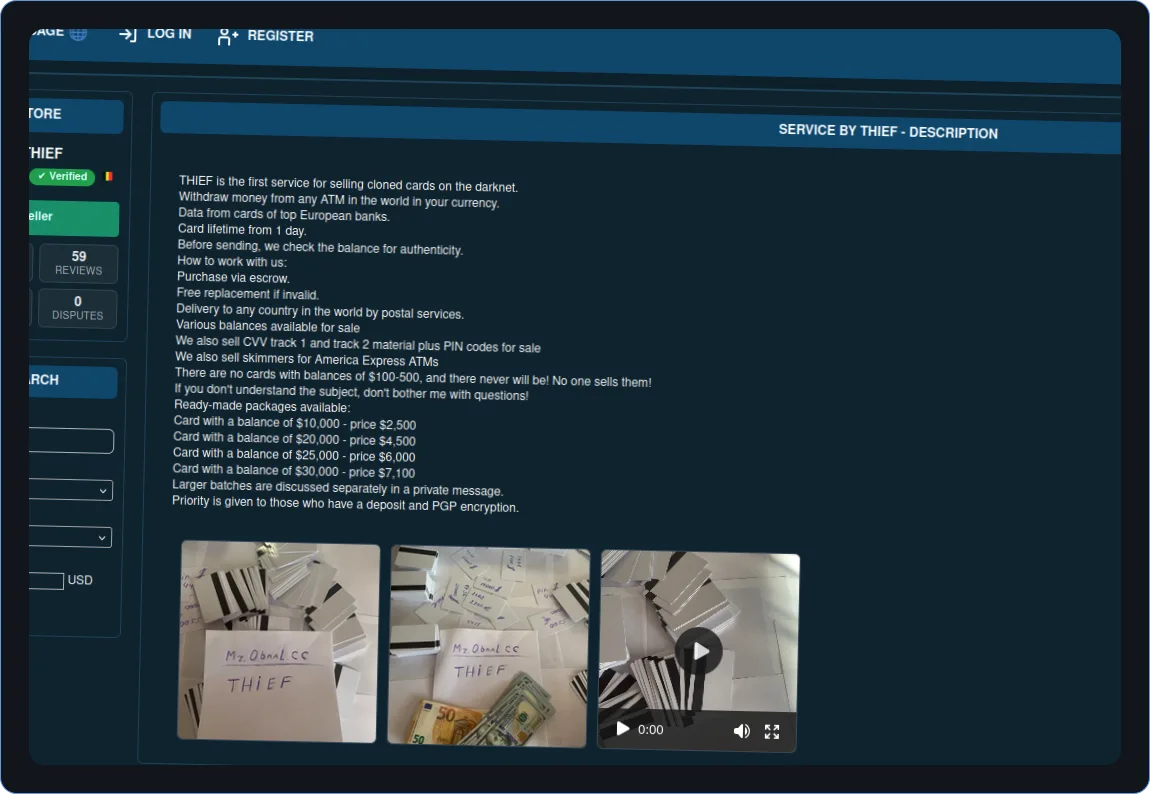
The website where the purchase was made promised anonymity, but physical cash withdrawal requires appearing before cameras.
Why Cryptocurrency Anonymity Failed
Mark selected Monero because of its untraceable reputation. Investigators still assembled a complete evidence trail leading to his arrest. Where did this digital anonymity collapse? Three critical vulnerabilities emerged in the cryptocurrency pathway.
The purchase platform created the first weakness. Mark acquired Monero through a centralized exchange requiring identity verification. He uploaded passport scans and facial photographs during KYC procedures. The platform logged his name, verification documents, transaction amounts, and exact timestamps. A court order compelled the exchange to surrender these records within 48 hours.
Temporal patterns formed the second vulnerability. Monero acquisition date, darknet login sessions, card arrival timing, and ATM transaction dates clustered within fourteen days. This time-based correlation provided circumstantial links between each criminal phase.
Physical artifacts eliminated the third layer of protection. Seized cards held magnetic stripe information identical to dumps from victim banking accounts. Cryptocurrency protocols cannot erase tangible evidence tying suspects to crime locations. Detecting whether a skimmer is present becomes irrelevant when cloning hardware sits in your possession.
ATM surveillance represented the definitive anonymity breakdown. Perfect digital operations—anonymous coin purchases, encrypted marketplace communications, secure package delivery—could not prevent facial capture on camera. Driver's license database comparisons through facial recognition yielded a 94.7% match confidence score. Courts accept matches above 85% as reliable identification.
Network activity analysis added another evidence layer. ISP records revealed Tor exit node connections during timeframes matching marketplace transactions. Tor usage remains legal by itself. The correlation with additional proof strengthened the prosecution timeline. ISP logs combined with exchange data, video footage, and physical cards formed an unbreakable evidence sequence linking digital anonymity attempts to real-world identity.
The Federal Sentencing
Mark T. entered his guilty plea in March 2025. Federal prosecutors brought two separate charges. Prosecutors filed the first count using 18 U.S.C. § 1029, targeting fraud involving access devices. This statute allows prison terms up to 15 years. The second count addressed money-laundering violations under 18 U.S.C. § 1957.
A Florida Middle District federal judge imposed the following penalties:
| Component | Specifics |
|---|---|
| Post-prison monitoring | 3 years |
| Federal custody | 60 months |
| Card acquisition cost | USD 480 |
| SSN theft proceeds | USD 4,900 |
| Financial sanction | USD 22,000 |
| Restitution to victims | Full compensation for three persons |
The presiding judge recognized Mark's minimal involvement. His actions consisted of buying cards and withdrawing cash from ATMs. He never distributed stolen information or managed other participants. Law enforcement never identified the data thieves or platform operators.
Federal courts weigh both theft amounts and organizational roles. Mark's restricted function—buying then extracting funds—produced a mid-range sentence. Ringleaders receive multi-decade prison terms. Yet 60 months for taking $4,200 shows how severely courts treat carding crimes. Even peripheral involvement triggers substantial punishment.
Restitution mandates require full repayment of stolen funds. Courts add interest charges and processing costs. This financial burden continues beyond his 5-year incarceration. It extends through his entire 3-year supervision term. Missing restitution payments creates new criminal exposure. Courts aggressively enforce these obligations. The financial impact extends punishment far beyond prison walls.
What Security Professionals Should Learn
This case delivers concrete lessons for cybersecurity teams and fraud prevention experts. Success came from layered defenses working in concert, not from one silver bullet.
Machine learning flagged the pattern first. Anti-fraud algorithms spotted the geographic and timing connections across cloned cards before human analysts stepped in. Banks need to keep funding anomaly detection systems that automatically highlight suspicious withdrawal sequences. Hardware defenses matter, but behavioral analysis catches fraud after data compromise happens.
Combining physical and digital forensics made the difference. ATM cameras captured suspect images, yet without transaction logs showing precise timestamps, investigators couldn't link footage to specific cash withdrawals. Security teams require systems that merge physical surveillance with digital transaction data instantly. Preventing data theft is important, but detecting fraud quickly after compromise occurs matters just as much.
KYC rules at cryptocurrency exchanges create investigation trails that criminals routinely underestimate. Every centralized platform turns into a potential evidence repository when court orders come through. Security advisors should recognize that cryptocurrency payments don't ensure anonymity when users register through KYC-compliant platforms.
Customer education represents the most fragile element in fraud prevention. The three victims didn't spot unauthorized withdrawals right away. Faster victim reporting enables quicker card blocks, cutting total losses. Banks should deploy real-time transaction alerts and teach customers visual inspection techniques for gas station pumps and standalone ATMs. Teaching people to recognize suspicious card slots helps reduce exposure.
This case also demonstrates why preventing card skimming demands multi-layered strategies. No single technology stops all fraud. Hardware protections (tamper-evident seals, resistant card slots), software monitoring (transaction pattern analysis), and customer awareness (visual inspection training) must function together. Forum users researching protection methods should understand that technical solutions alone can't eliminate physical surveillance threats. Every defense layer contributes to the overall security posture, and removing any one layer weakens the entire system.
From Darknet to Prison in 72 Hours
Mark T.'s journey from darknet purchase to federal prison took 72 hours of active crime and 15 days of investigation. He gained $4,200 and lost five years of freedom. The scheme failed not because of sophisticated law enforcement techniques, but because basic surveillance infrastructure captured his face at the moment crime became physical.
The intersection of digital anonymity and physical presence creates unavoidable vulnerabilities. Cryptocurrency can obscure payment trails, but ATM cameras record faces. Darknet marketplaces can hide seller identities, but home searches reveal physical evidence. Every card withdrawal creates multiple evidence types that persist long after the cash disappears.
For those studying fraud prevention, this case demonstrates why layered defenses matter more than any single security measure. ATM surveillance, anti-fraud algorithms, ISP logs, KYC exchange records, and physical forensics each contributed essential evidence. Understanding how these systems interconnect helps security professionals build more resilient protection frameworks against evolving carding threats.
Where to look next
These services are useful starting points for further research. Tools & services.